What is the Literacy Rate in Korea?
One of my favourite sensations is that of ambiguous sovereignty. Don’t get me wrong, I enjoy a well-functioning welfare state and judicious taxation to keep the public transport running on time, but it is also healthy to have the power structures that we live under be called into question every so often. Whose national narratives do we trust in these circumstances? To whom do we turn for authority concerning claims about social reality? These ambiguities can be explored in specific geographical regions of the world: border countries that have passed between nations like regifted scented candles, remote islands with limited loyalty with the mainland, or in the midst of large cities that identify more with the global cosmopolis than their subregional nearest neighbours.
Despite their relative social homogeneity, all of the mainland Nordic countries have their own examples. Norway has the international anti-Antarctic archipelago of Svalbard in the extreme North; Sweden has the neo-Medieval treasure of Gotland off its east coast; and Finland has the Swedish-speaking Åland islands muddling its national identity after receiving them in one of the only lasting decisions by the League of Nations. All three nations are stitched together across their northern extremities by the territory of the Sámi people, one of the few peoples of Europe routinely described as “indigenous”, and who routinely force the three nations to confront the unfamiliar emotion of post-colonial guilt. Central European Denmark has its own awkwardly ex-empire unresolved relationship with Greenland and the Faroes, stretching the bounds of their modern influence uncomfortably far across the north Atlantic. The United Kingdom, more than familiar with managing uneasy relationships with former possessions, has its own Celtic discontents closer to home along its Western fringe. More extensive recent immigration, contributing hugely to the thriving of the country, has also forced an accelerated reckoning of what it means to be a citizen of the former fulcrum of the world.
This summer, I had the pleasure of visiting the Demilitarised Zone (DMZ) between North and South Korea, possibly the most famous instance of awkward middle-grounds between rival political powers. While preparing for the day-trip from Seoul, I did some preliminary reading. Somewhat randomly, Ender’s Game (1985) by Orson Scott Card came to the top of my audiobook pile while waiting, but it made strangely appropriate reading in Seoul. For context: There were many young men in camo fatigues visible in the city, performing their involuntary military service, and privileges were explicitly shown to them. It was interesting that these young men clearly enjoy high social status, but the idealised K-pop male idols are conspicuously effeminate, wearing makeup, dressing fashionably and celebrated for singing and dancing well. It is possible that they offer a soft-edged antidote to the everyday militarism present in South Koreans’ lives. This has probably been discussed extensively in gender studies departments in Korea and I have simply not done the requisite reading, but it was striking to a lay-person such as myself.

Meanwhile, the book was militaristic science fiction targeted directly at teenagers who (presciently enough for 1985) enjoy video games and internet message boards. I didn’t particularly enjoy it: All the adolescent narcissism of Artemis Fowl meets all the space fascism of Starship Troopers, without the campy subversive film adaptation to redeem it. At one point the term “ansible” is used to describe faster-than-light communication devices: this is lifted directly from Ursula K Le Guin, who first used it in her 1966 novel Rocannon’s World, referred to somewhat disrespectfully in Ender’s Game as “some old book”. Orson Scott Card has also supported laws criminalising same-sex sexual activity: I do not see it as a coincidence that the alien species that is eventually eradicated are known as the “buggers”.
Alongside the book, I was also drawn to some statistics coming out of North Korea, which make drily ridiculous reading to outside audiences:
- Kim Jong-Il hitting eleven holes-in-one in his first ever round of golf. I know just enough about golf to realise that this would not be possible even with cosmological-scale beginner’s luck.
- Zero covid cases ever: one’s credence is initially tempted given the hermitic nature of the country, but the claim becomes more absurd considering the poor healthcare system and the presence of several thousand immigrants from China, which notoriously under-reported its own cases.
- A 100% literacy rate! For one reason or another, this was the one that stuck in my mind the most. Something about the unambiguous nobility of the claim, applied to the population as a whole rather than individual hagiographised leaders.
Given the external narratives about the poverty and destitution of the locals, the 100% literacy claim seemed surprising: any claims of perfect records are immediately met with skepticism by statistically educated people, who are trained to recognise and interpret the variation and uncertainty present in our understanding of the world. That said, it is credible that North Korea might have a very high literacy rate: Sometimes communist countries do the basics more thoroughly than their capitalist competitors. Cuba famously used to have a lower infant mortality rate than the USA despite its vastly more limited resources.
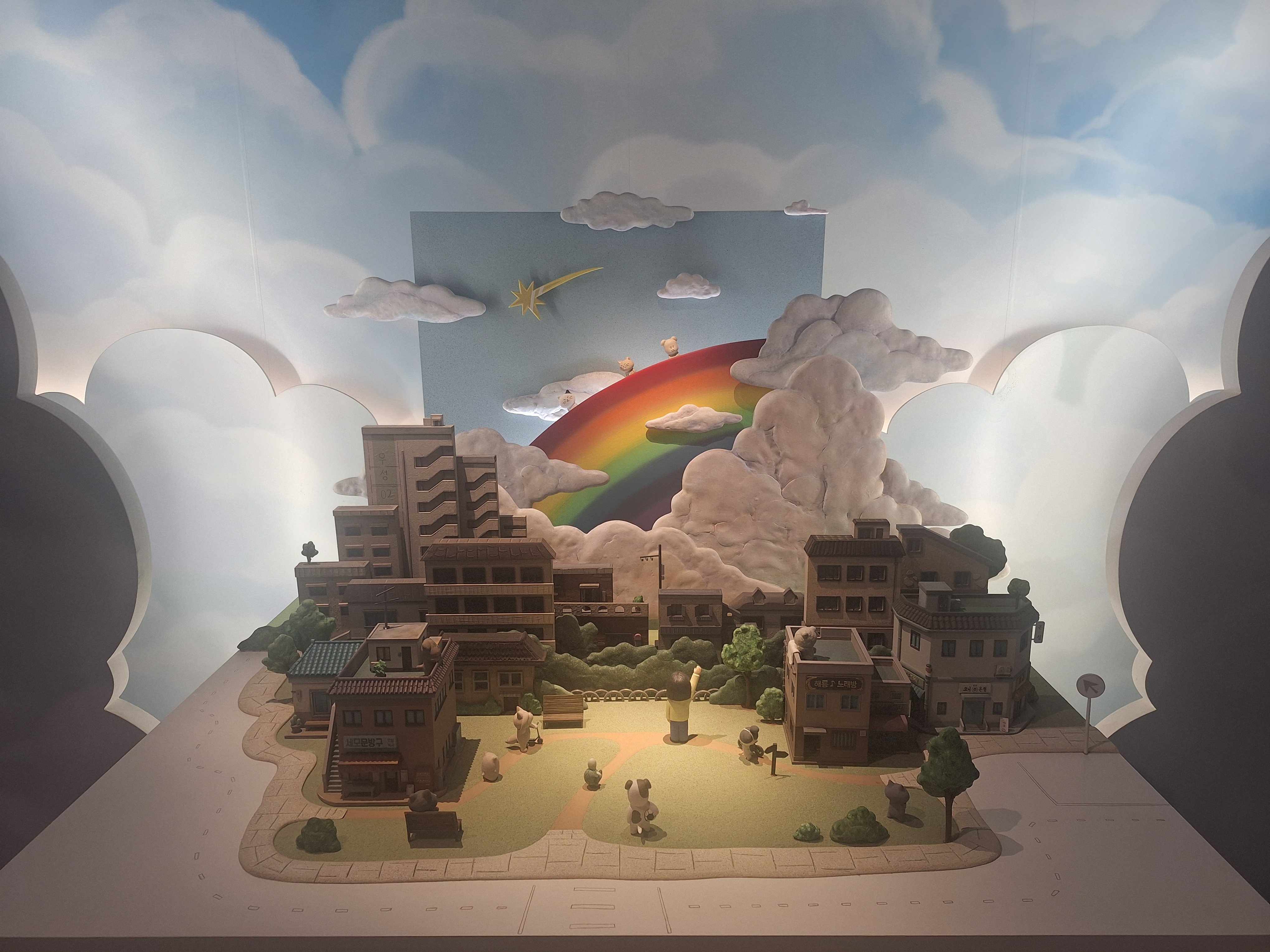
By comparison, South Korean literacy rate is generally estimated at around 98%, with the 2% deviation from perfection having several possible causes: Firstly, the enormous green flag of greater honesty and transparency in the reporting process. Secondly, deep inequality in access to education: anyone who has seen Parasite (2019) would understand the profound variation in qualities of life between rich and poor in South Korea. Thirdly, the heavy technological-dependence of society may turn locals away from traditional forms of reading. Younger generations process information primarily through short-form video and social media: if we think of literacy beyond basic reading skills, South Koreans might be considered to have a literacy issue with a reduced focus on more challenging long-form writing. That being said, Seoul is the only city I know which has a library as the centrepiece of its principal shopping centre, and recent Nobel prize winner Han Kang is clearly popular and successful. The online illustrator Keykney hosted a well-attended and text-heavy exhibition of their webcomics, which was a fascinating multi-media fusion of internet culture, traditional visual art, and extensive walls of text to be read.
At last, the day of the DMZ visit arrived. On the bus on the way north, partly inspired by the literacy rate claims, I read Darrell Huff’s 1954 non-fiction book How to Lie with Statistics. I was not quite sure what to expect, as skepticism concerning statistics can take many forms:
- The underlying anxiety that many people feel around mathematical topics, leading to insecure negative reactions.
- The suspicion that this is just some tedious bookwork necessary to enable the real fun of the phenomenon being studied.
- The cynicism that fails to believe that these abstract numbers are based in reality and not fabricated on the spot.
- The “Lies, Damned Lies, and Statistics” solipsistic appeal to not have a principled position influenced by something as prosaic as data.

Instead of these, I found something sympathetically specific: case studies in which statistics had been constructed that are technically true but misrepresent reality in the service of the agenda of the analyst. Think of reporting median instead of the mean salary in a company when wanting to hide the out-of-proportion income of the CEO, or the legion of visualisation methods that provide misplaced intuition while still maintaining the illusion of objectivity:
[A misleading graph] is vastly more effective, however, because it contains no adjectives or adverbs to spoil the illusion of objectivity, there’s nothing anyone can pin on you.
There was not so much in the way of modern statistical inference tricks that might be used to, for example, nudge a p-value below a significance boundary (someone should write that book!). Still, it was quite interesting in its own somewhat superficial way.
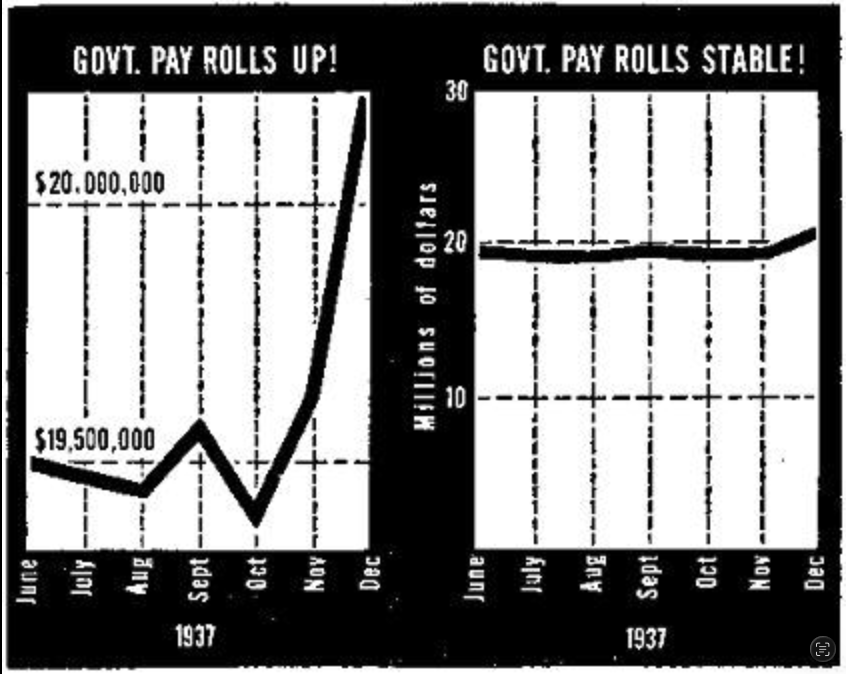
This book led me to reflect on the experience of my totalitarian statistician counterparts, and what kind of pressure they are under to generate pseudo-objective numbers to support the regime. I was dwelling on a couple of issues in particular:
- Are the statistics coming out of North Korea were entirely made-up, or of the technically-true-but-carefufully-selected variety? I found a Blog post that suggested that some decades ago, they tended to “fudge” the numbers rather than outright fabricate them, but that was quite some time ago.
- What is the real literacy rate, if not the unbelievable 100% reported by the regime?
With these two questions in mind, I entered the DMZ.
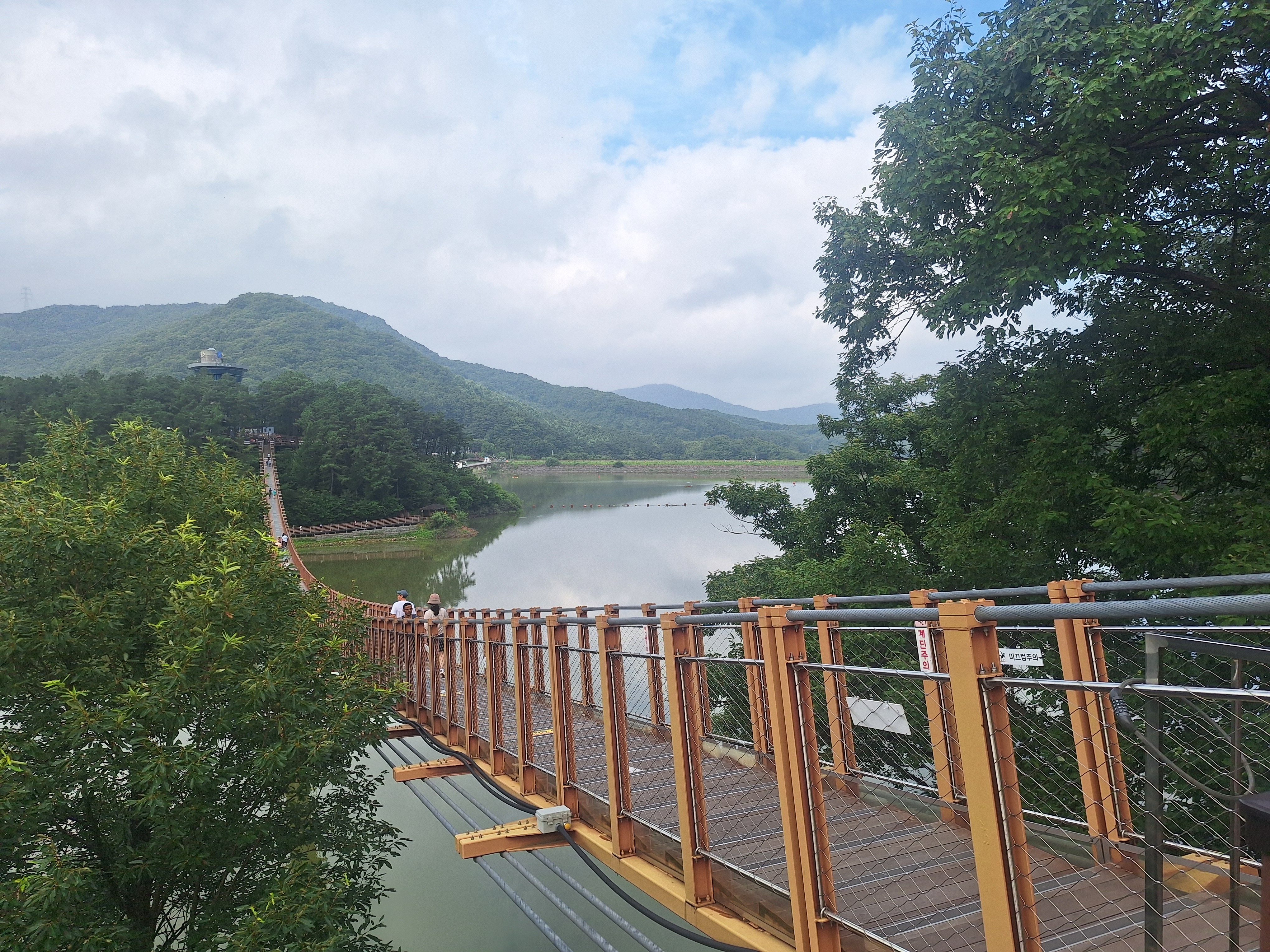
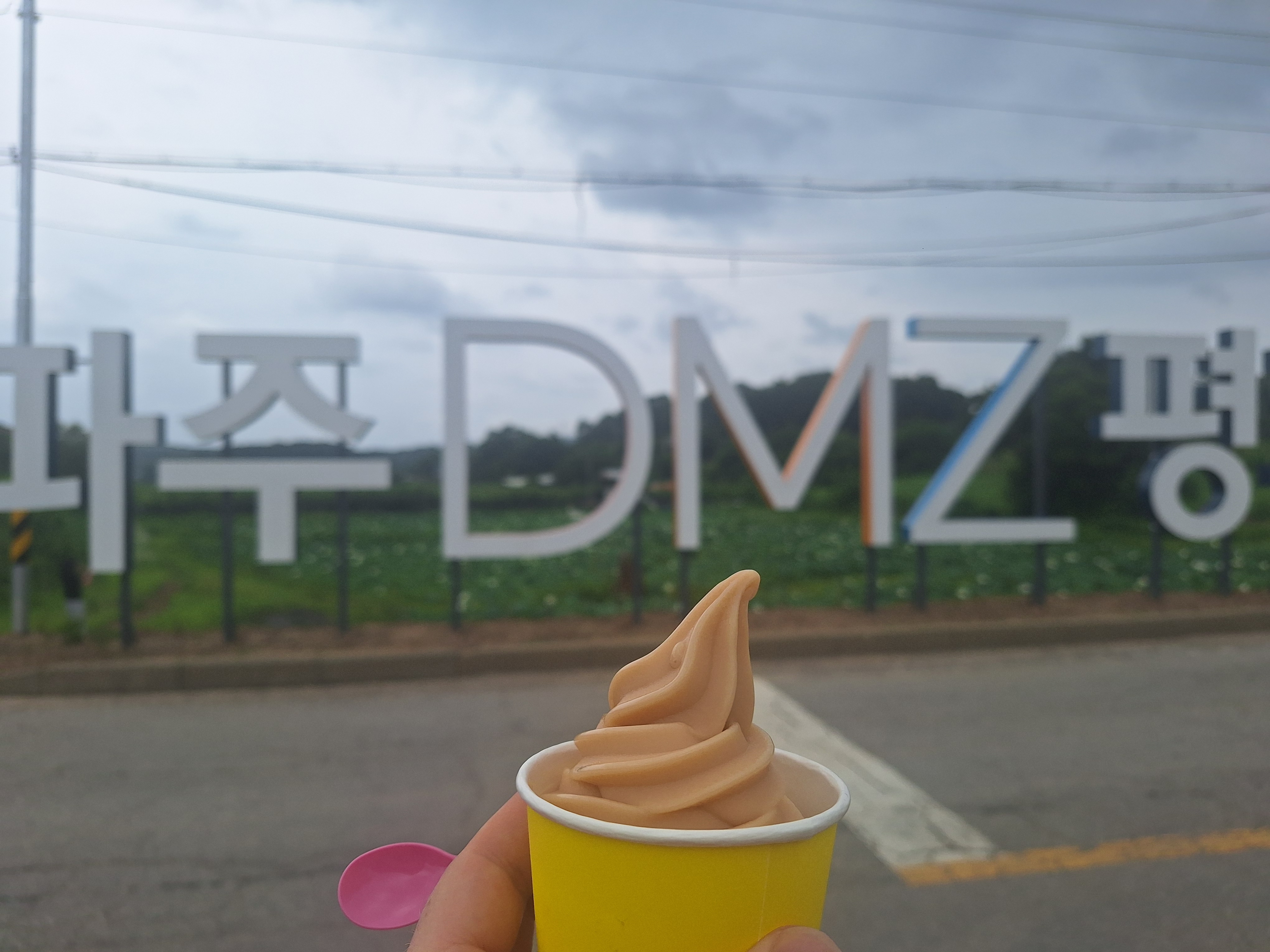
The DMZ itself was manifestly beautiful: decades of enforced depopulation has led to its flourishing as an informal nature reserve. The experience of spending time in the pseudo-organic landscape was a welcome antidote to the psychological stress of finding myself in the immediate vicinity of an ongoing conflict with nuclear weapons on the table. The weather was warm and clear: we were herded to an observation post with powerful binoculars to look over the border to ogle the wretchedness of the DPRK. I felt absurd visually skipping through the luscious greenery trying to pick out the much smaller, shabby sentry tower facing us from the other side. The Potemkin village of Kijong-dong stood clearly devoid of people, but with facsimile buildings that were convincing enough at a distance: the contrast with the thriving natural environment was made all the more more tantalising by the strict ban on photography.
The Q&A session with a North Korean defector followed. It was unclear what format this would take, and how tightly controlled the parameters of the interaction would be. We were shepherded into a room with about a hundred chairs arranged in narrow rows facing a small stage. We were shown an introductory video that was about ten minutes long, showing poverty-stricken Northerners delivering coal by horse and cart, and reconstructions of attempted border-crossings. It was not clear if this was intended to encourage us to show sympathy for the defector’s plight, or as a warm-up to the narrative of senseless suffering that was about to become flesh in front of us.
The defector was brought on stage with an interpreter: she was perhaps in her 50s, dressed conservatively in a Western style. A few introductory explanations came that she had defected in 2019, and the audience was asked to provide questions in a somewhat haphazard way. I was sat near in front so was able to ask one quite early: “What is the literacy rate in North Korea? How many people know how to read?” After a couple of attempts the interpreter understood my English, and passed the question onto the defector. Her eyes widened at the question, and looked at me with a sense of shock. Given the primitive representation of life in the North shown in the video, this didn’t seem like an unreasonable question, but from her response I would think that she had never been asked this before. She explained quite matter-of-factly that everyone could read, then immediately followed up that this was the one thing that the government did well. Furthermore, she explained that thorough selective education is necessary to ensure that everyone could consume state propaganda direct from the source, and not through the potentially diluting influence of word-of-mouth.
A couple of other questions followed, describing in detail her defection process through China and ultimately via Mongolia. There was a slight lull in momentum, so I took the opportunity to ask my second question, motivated by How to Lie With Statistics: “Of all of the narratives and statistics that we hear from North Korea, do they have any basis in reality, or are they totally fabricated?” The defector took no time to answer this time, stating definitively that they were all lies and not to be believed. What I really meant was whether the lies told by the regime were of the outright fabrication type, or of the Darrell Hoff-style accurate but bad-faith misrepresentations. I wanted to clarify with a follow-up question “Yes but what kind of lies?”, but a third question felt selfish at that point. My second question might have seemed stupid to everyone else, but I was angling for a degree of nuance that wasn’t really possible in the format provided.
The day trip gave me much to reflect on, and I eventually came to a better understanding of what had happened in the Q&A. My questions were almost those that a DPRK-sympathiser would have posed, but I did mean them in good faith given the research that I had done. I doubt that that my overly regime-sympathetic questions have got me put on a list: I successfully made it through the airport on the way out, at least. In retrospect, I also realised the absurdity of my line of inquiry: to anyone with a lived experience of the consequences, the difference between a technically-true-lie-with-fudged-statistics and a straight-up fabrication is immaterial. The latter is immediately ethically offensive, but the former is more insidious for the same reason, since it can be said with a straight face and with sources to cite. Masters of the craft like the DPRK propagandists blend the two effortlessly. My attempted quizzing of a regime survivor on her experience the difference was exposed as pretentious, academic quibbling.
So what have I learned? To my first question: bad-faith selective statistics are at least as useless as fictitious ones, and we should pride ourselves on treating both with disdain. To my second question: what is the literacy rate in Korea? Well, literacy is not a black-and-white issue, as the South Korean authorities seem willing to acknowledge, with their approach featuring laudable degrees of openness and nuance. It does appear that the rate in North Korea is high, but perhaps government pressure, limited analysis resources, and some crude rounding up, leads to suspiciously perfect figures. Whether you are able to read, however, is not the final word, and each region has its own additional issues: the North is limited in what they are allowed to read, and the South is struggling to find the will to read more challenging works when short-form video is omnipresent. And in the gloriously ambiguously sovereign DMZ? Bereft of permanent residents, we have the ultimate statistical ambiguity when normalising with respect to a population of zero: Undefined!