What can cultural responses to nuclear warfare tell us about how to handle upcoming climate and AI crises?
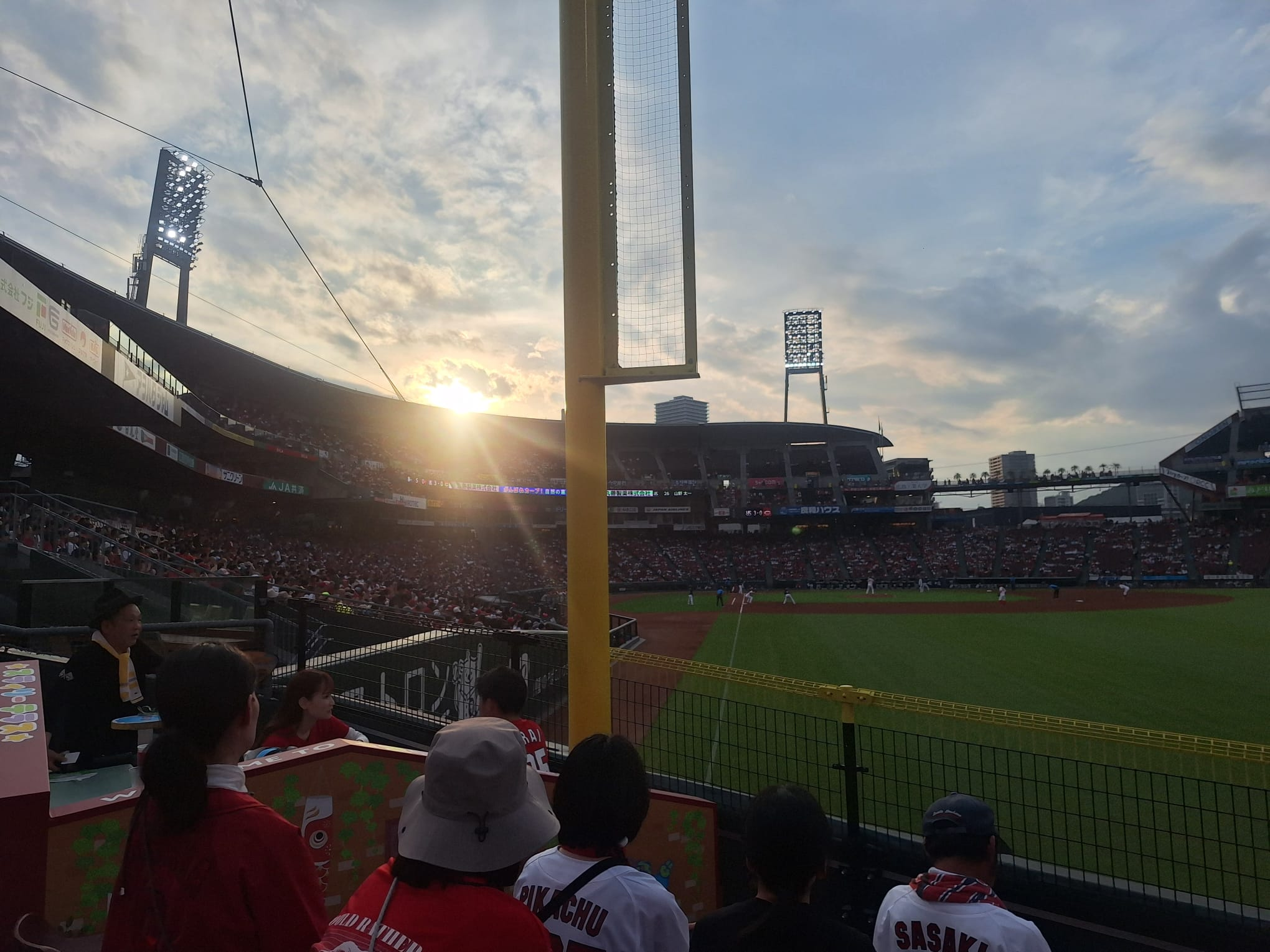
This year, I was lucky enough to celebrate my birthday in Hiroshima. The highlight of the day was a live baseball game, with the Hiroshima Toyo Carp hosting the Tokyo Yakult Swallows. This was the coincidentally the reverse fixture of that at which Haruki Murakami felt the distinct calling to abandon jazz cafe management and become a novelist:
It was the season opener, and they were taking on the Hiroshima Carp at home. I remember that Yasuda was pitching for the Swallows. He was a short, stocky sort of pitcher with a wicked curve. He easily retired the side in the top of the first inning, and in the bottom of the inning the leadoff batter for the Swallows was Dave Hilton, a young American player new to the team. Hilton got a hit down the left field line. The crack of bat meeting ball right on the sweet spot echoed through the stadium. Hilton easily rounded first and pulled up to second. And it was at that exact moment that a thought struck me: You know what? I could try writing a novel. I still can remember the wide open sky, the feel of the new grass, the satisfying crack of the bat. Something flew down from the sky at that instant, and whatever it was, I accepted it. - Haruki Murakami, What I Talk About When I Talk About Running (2007)
I won’t claim to have received quite such clear cosmic direction, but the game did provide appropriate narrative satisfaction. Having gone down 0-3 early on, the home side eventually won with a home run in the bottom of the ninth: this is analogous to winning it with a six off the final ball, or a particularly spectacular golden goal in that curious decade-long window of FIFA experimentation with extra-time brinksmanship. Real anime finale stuff, in other words.
Even more striking than the players’ performance was the engagement of the crowd. The Mazda stadium was near-full of locals, with communal chants known universally by heart and crowd participation so well-organised that I felt like an unbeliever who had dropped into a Catholic mass without knowing the liturgical choreography. It reminded me of one of those cities whose collective civic peace of mind hinges directly on the thriving of their local sports team. I have experienced similar public devotion only in post-Thatcherite industrial cities in the UK whose only sources of pride are their local football team, some local variety of baked good, and the lost industry that they used to have.

Of course, Hiroshima has lost more than anywhere else. Having studied physics up to Master’s level, I have always harboured a guilty fascination for the city and the destruction that was wreaked upon it. What might there be to see in a city that was so thoroughly destroyed? How does one rebuild a physical and social environment from nothing? Founded in 1949, the baseball team came to represent the triumph of the city’s post-war recovery, providing something for the traumatised surviving population to collectively cheer. It suggests something quite positive about the human capacity for forgiveness that America’s Pastime could become so close to the hearts of this community, although it might also simply indicate the true power of the USA’s hegemony: if your own heritage has been physically obliterated, what else do you have available than the culture of your occupiers?
What other responses are possible when starting from something so horrifying? One thinks of Adorno’s “To write poetry after Auschwitz is barbaric”: our existing cultural tools feel offensively inadequate in reply to unprecedented atrocities. And yet, people tried.
Artistic reactions came from across different media as people tried to process the trauma in diverse ways. The rawest of them all are the “A-bomb Drawings by Survivors”, visible at the Hiroshima Peace Memorial Museum. Their emotional impact is heightened by the crude amateurism of so many of them: these are not cultivated artistic responses to the trauma, but a demonstration that the eyewitnesses were an arbitrary subsample of the general untrained population. More professional visual media would follow later, starting in 1973 with the Barefoot Gen series by Keiji Nakazawa, a Hiroshima survivor and professional manga artist who captured his experiences on paper.
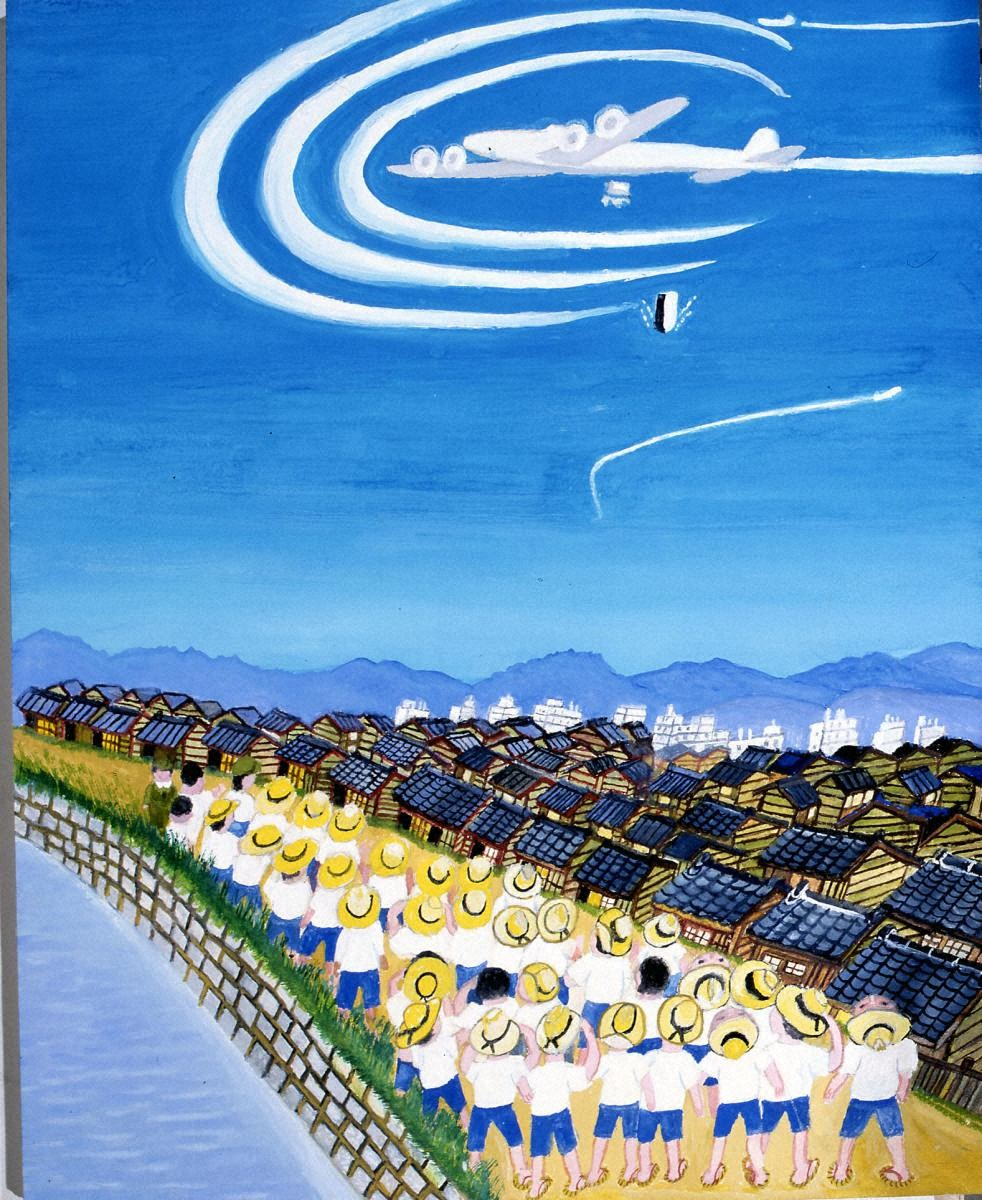
The world of cinema was relatively fast to respond: The first Godzilla film was released in 1954, in which a monster directly conceived from nuclear testing fallout terrorises the citizenry of Japan. The metaphor for the haunting presence of atomic weapons and their consequences is not subtle, but with time and the further development of the franchise and film CGI, modern viewers would consider the earliest film to be verging on kitsch. It is staggeringly difficult to imagine the impact this film would have on audiences, partly because of the then-pioneering special effects and also the timeliness of the material for the still-fresh memories of the audience. Further kaiju series would follow, but Godzilla remains the dominant example: the others were fun movie spectacle but lacked the historic gravitas of the genre originator.
The most famous musical response by some way is Penderecki’s 1961 Threnody to the Victims of Hiroshima, one of the few post-war avant-garde works to make it into the standard classical repertoire. It is a challenging work for string instruments, relying heavily on dissonance and jarring extended technique, but anything more sonorous might well be considered inappropriate to commemorate an event so violent. Intriguingly, the composer only had the idea for its dedication and title after hearing it performed: it is fascinating to think that he would conceive and fully compose a work so disturbingly perfect for its title without having had it in mind from the start. One wonders if he was carrying the association subconsciously while composing, or perhaps using his own experience of the war in Poland that he was not willing to reference directly.
There is another work that sets the European and Asian traumas of the war side-by-side. Hiroshima mon amour directed by Alain Resnais, based on a script by Marguerite Duras, is a seminal 1959 work of French New Wave cinema. The opening sequence features a compilation of shots of tourism sites in Hiroshima, including the Peace Memorial Museum that I myself visited. The soundtrack is a dialogue between a French woman and a local man, in which she haltingly recounts her memories of her visit: “The photographs, the reconstructions, for lack of anything else, the explanations for lack of anything else.” The man consistently responds: “You saw nothing in Hiroshima”.
It is uncomfortable viewing, partly because of the difficult subject matter and partly because it feels like he is quite flagrantly gaslighting her with repeated denials of her experience. In a way, he is also reminding her that his experience as survivor takes primacy, and there really is nothing left to see there but reconstructions. The film goes on to represent the woman’s own trauma from the war in Nevers, France: It is gradually revealed that she fell in love with an occupying German soldier who was shot upon the city’s liberation, leading further to her social ostracism and eventual expulsion. The pain of each of their traumas is coupled to their fear of forgetting that which they have lost.
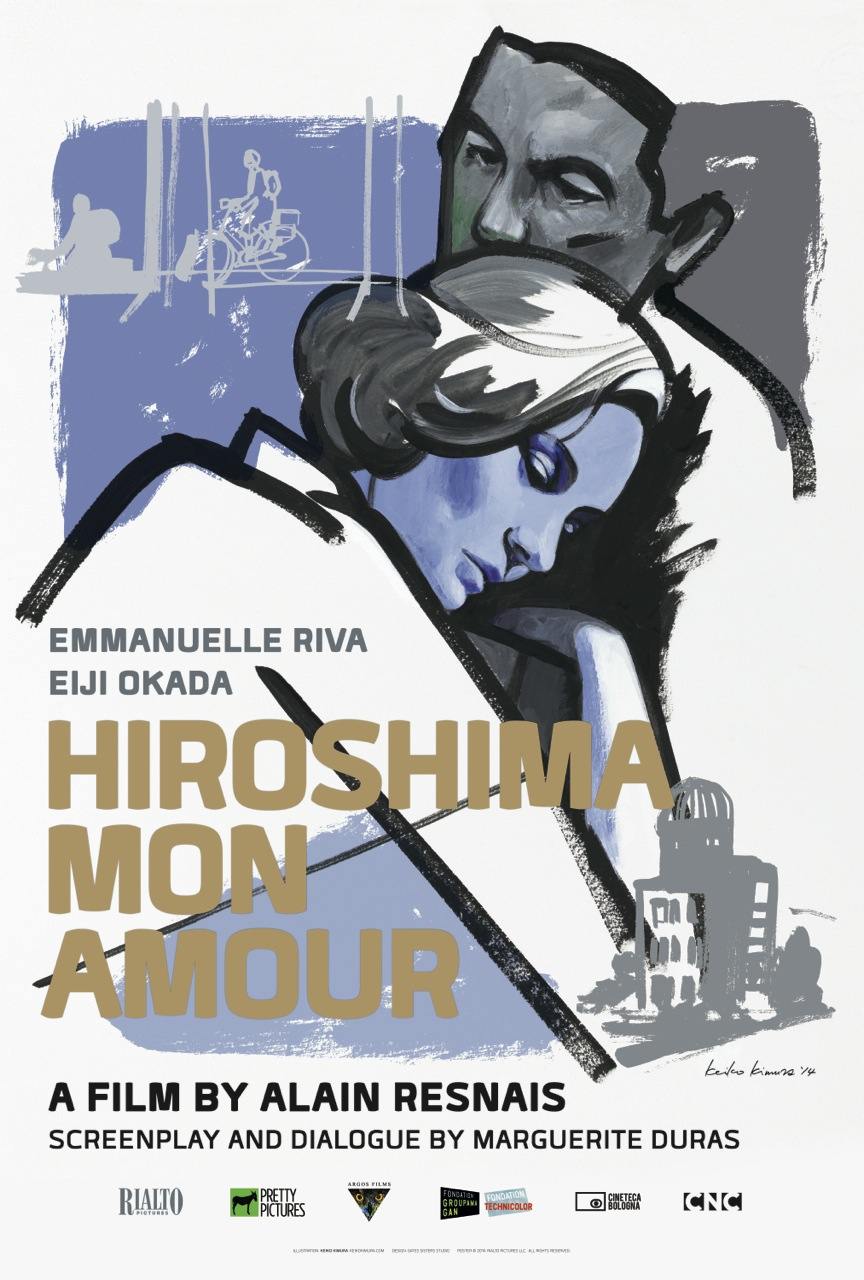
The film closes with a strikingly didactic stance on then-present politics:
How much do the 40,000 A-bombs and H-bombs currently stockpiled in the world equal? They are a tribute to man’s scientific genius, but unfortunately man’s political intelligence is 100 times less developed than his scientific intelligence, and for that reason he forfeits our respect.
The narrative thus looks forward in time to the incoming cold war era of nuclear paranoia, which itself would inspire cultural works, not directly referencing Hiroshima but the threat of potential violence kept fresh in the refrigerator of the Cold War.
Perhaps the most famous film on the subject is Stanley Kubrick’s 1964 Dr Strangelove: it is interesting that the subject of impending nuclear annihilation was what tempted Kubrick to make the only out-and-out comedy of his career. Perhaps he had followed the advice of atomic physicist Niels Bohr’s witticism that “Some subjects are so serious that one can only joke about them.” A similarly, seemingly light-hearted atomic-age artefact is Nena’s 1983 synthpop classic 99 Luftballons: as West Berliners, they would have been acutely aware of the gravity of the situation, but it seems like some predicaments are so precarious that all one can do is dance.
Artistic representations of prospective impending nuclear destruction fall firmly within the well-established apocalyptic genre, which is as old as literature itself: the 4000-year-old Epic of Gilgamesh represents humanity being wiped out in floods sent by vengeful deities. When a work is considered to have been an influence on Homer and the Hebrew bible, then we know we are dealing with a rare vintage. The (post-)apocalyptic genre has ever since been prone to a certain religiosity, with Western works mostly drawing on Judeo-Christian end-times eschatology. Perhaps even a secular apocalypse comes with an implicit moral reckoning that leads the authors to revert to their inherited sense of a judgement yet to come.
A Canticle for Leibowitz, written by Walter M. Miller Jr. in 1959, leans into this tendency head-on, with a caste of monks hiding in the wasteland of the Rocky Mountains after nuclear war: their relics are the engineering diagrams sourced from raiding abandoned fallout shelters while dodging gangs of marauding mutants. They labour, slowly and in the scholarly dark, to reconstruct the past from the random assemblage of surviving technical information serving as their academic illumination.
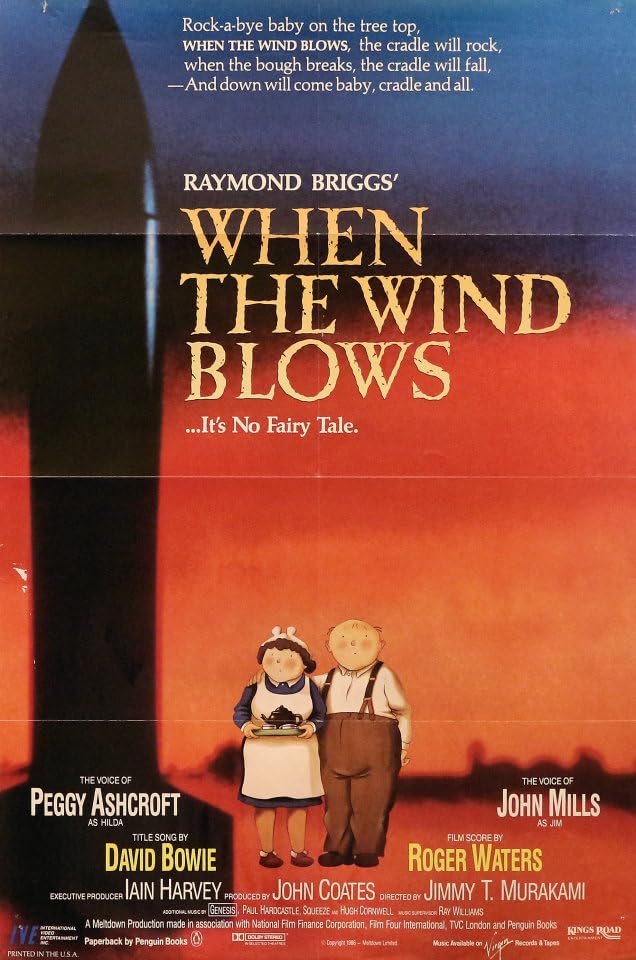
Others lean into the grit of the reality of the simple question of “What if a nuclear attack were to happen over here rather than over there?” The 1984 TV film Threads traumatised a nation of BBC viewers with its credible representation of atomic war and descent into nuclear winter seen from Sheffield. Likewise, the 1986 animated film When the Wind Blows shows a similar narrative from the perspective of an older couple in rural Sussex, made all the more disturbing by the cozily familiar animation style of Raymond Briggs, more famous to UK audiences for his Christmas classic The Snowman. Nevile Shute’s 1957 novel On the Beach and film adaptation two years later asked the same of idyllic Melbourne: the bitter irony exploited that Australia, ever the global afterthought, is yet again left out of the international conversation and warhead exchange, and has been left to slowly (and unscientifically) die of the gradual southward drift of the resulting radiation. Reading and watching these, wondering how someone could conceive of something so heinous happening so close to home, one thinks of British playwright Sarah Kane’s response to questions about her notorious 1995 play Blasted: “my imagination isn’t that fucking sick…I just read the newspapers.” Her creative crime had been simply to transplant the ongoing atrocities happening in Bosnia to a hotel room in Leeds.
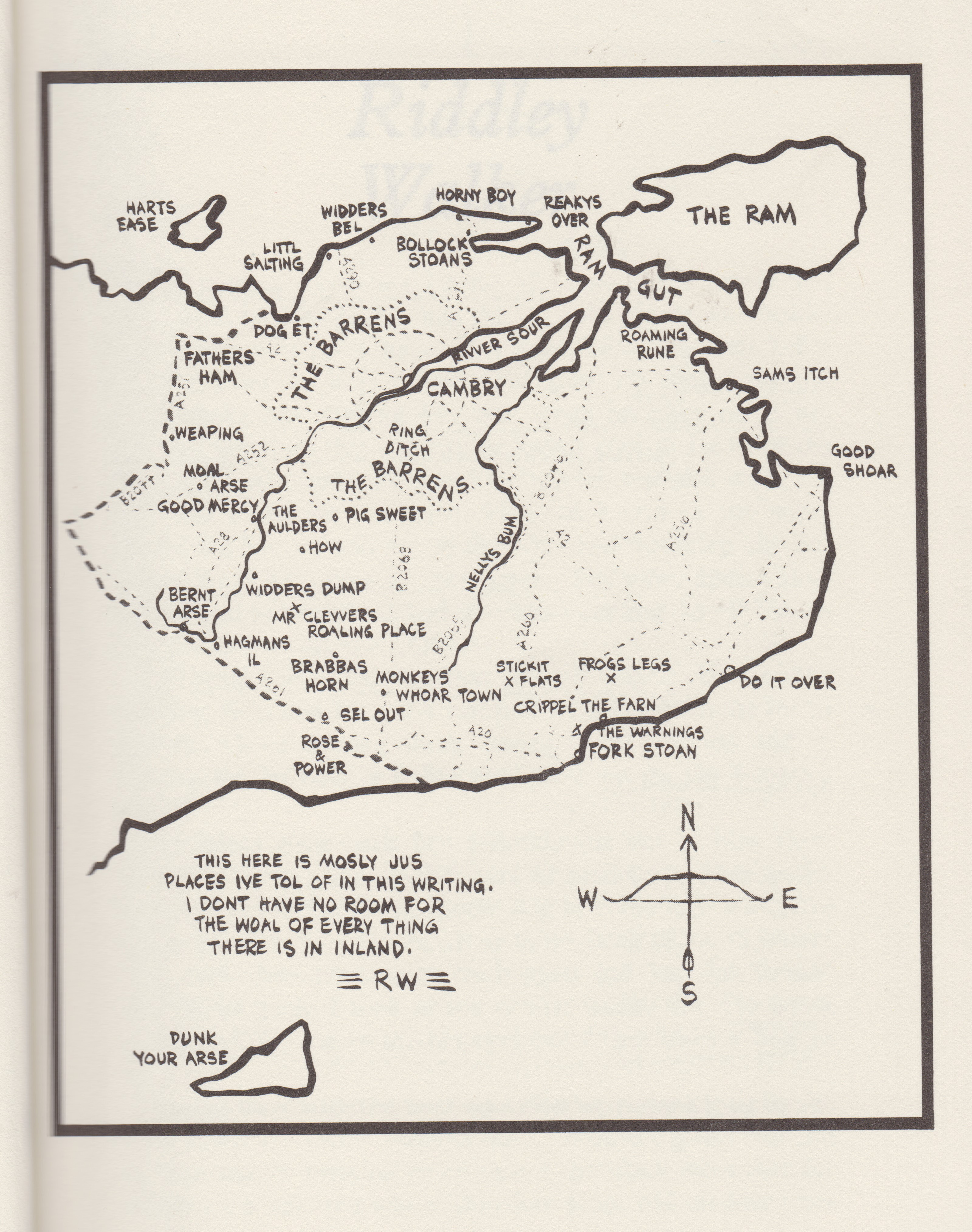
The work that best unifies the religiously sublime and disturbingly familiar for me is Russell Hoban’s 1980 novel Riddley Walker. Set not so far from where I grew up in Southeast London, the book follows the adolescence of the title character, who comes of age in the physically and culturally devastated ruins of the region surrounding the former English religious capital of Canterbury, Kent. Living in the shadow of a nuclear war centuries past, the populace have reconstructed a system that fuses political power and religious belief, justified by the scarce, salvaged artefacts of times gone by: these include a medieval wall painting of Saint Eustace recovered from Canterbury cathedral, and a Punch-and-Judy puppet show1. The surviving population leads a ragged existence within early-Medieval-style palisaded settlements, the fences existing to protect them from the bands of mutant wild dogs roaming the countryside. Nervous journeys between settlements armed with low-tech spears and arrows are performed when necessary to share resources or information, often through the parodic medium of puppet shows for an illiterate audience. The authorities are aware of a historic devastating war brought about by explosions, and are trying to reconstruct the atomic age weaponry using the middle-ages technology they have available: they are stumbling towards a basic chemical explosive, akin to a rudimentary dynamite, and are not in a position to understand the conceptual leap needed to recreate the nuclear weapons whose deafening echoes they still inhabit. Life is cheap, lives are brief, abuse of all kinds is rampant within the community still carrying the traumas of the conflict from eons before.
What sets the book apart experientially to the reader is the futuristic dialect that the whole book is narrated in: the English language has transformed into something more raw, phonetic, and horrifyingly beautiful. Riddley’s sub-Sunday-school received understanding of religious terminology is rendered through the horror of his existence into phrases of disturbing elegance: “sovereign galaxies and flaming nebulae” becomes “sarvering gallack seas and flaming nebyul eye”, the biblical “Adam” is punned with the nuclear “atom”, the “Littl Shining Man” refers ambiguously to the split nucleus and the pierced body of Christ. Riddley turns to mantra-like comfort phrases: “Eusas head is dreaming us”, “Your tern now my tern later”, and the hollow, sarcastic solace of “Trubba not”. Limited in his understanding of our world of philosophy and learning, Riddley is clearly possessed of his own personal spirituality, with some passages breaking into a beautifully clumsy lyricism when he expresses it2:
Its some kynd of thing it aint us but yet its in us. Its looking out thru our eye hoals. May be you dont take no noatis of it only some times. Say you get woak up suddn in the middl of the nite. 1 minim youre a sleap and the nex youre on your feet with a spear in your han. Wel it werent you put that spear in your han it wer that other thing whats looking out thru your eye hoals. It aint you nor it dont even know your name. Its in us lorn and loan and sheltering how it can.
The book is a beautiful and darkly funny insight into the mind of the title character: what human parts of us will remain when our world is upended and our way of life is destroyed? What response is possible after the apocalypse when all we have is what we can salvage from the ruins and the dust?
Since the Cold War ended, the threat of nuclear war is no longer as immediate as it once was. Concern about nuclear war seems old-fashioned now, even though the world itself is as well-armed and conflict-plagued as ever. Are you worried about the still realistic risk of instantaneous radioactive obliteration? How quaint. I count myself lucky to have spent my childhood years in the 1990s without any apparent existential threat to my well-being. The public narrative changed with 9/11 and the War on Terror, and today we are facing the dual and related threats of a climate crisis and potential AI singularity.
There is something to be learned about these two impending (and dependent) crises from our previous brushes with nuclear annihilation. The initial motivation to develop atomic weaponry to counter the reported German bomb program and the horrors of Nazim would have felt well-justified, but if the goal of the Manhattan project were to build the A-bomb in time to prevent the Holocaust then it must be considered a failure. After the fall of Germany, all of the physicists, with the notable exception of Joseph Rotblat, continued to work on the technological puzzle that they had sunk their teeth into without any evidence that the Japanese had their own parallel program. One cannot help but draw an analogy to AI researchers insisting that they must develop their potentially dangerous projects, all in the name of keeping up with their Chinese analogues: I am quite confident that they would continue their efforts with enthusiasm even after the collapse of their international rivals.
What can the cultural responses to the nuclear violence discussed above tell us about how to handle impending crises? What can we say about how we might handle these future challenges, and what can we expect to survive of our humanity afterwards?
Hiroshima mon amour helps us to specify what we really fear in these crises. The French woman was as equally disturbed by the trauma of losing her lover as by her own increasing inability to remember him. Which day will be more tragic: the day when the last glacier melts or the day when the last person to have seen a glacier dies? The “enlightened anthropocentric” perspective would hold that environmental campaigning is done in the interests of humanity and our own expected suffering, and we should not pretend to be acting out of benign concern for the planet that will continue without us. It is hard to say whether we are mourning the death of our planet or the loss of our ability to live here in good conscience, but increasing precision about the sources of our fears will go a long way towards alleviating them.
Similarly, Riddley Walker specifically demonstrates one path by which new technology can destroy not only itself, but also centuries of previous technology, and our ability to rebuild it from the ruins. This is relevant to the climate crisis, as Margaret Atwood lays out in her climate-fiction dystopia Oryx and Crake:
“Because all the available surface metals have already been mined,” said Crake. “Without which, no iron age, no bronze age, no age of steel, and all the rest of it. There’s metals farther down, but the advanced technology we need for extracting those would have been obliterated.”
Analogously with the rise of AI, we are delegating to LLMs increasingly complex “human” skills that we used to take pride in. After a couple of generations of this behaviour, who will bother or even remember how to implement a basic statistical inference algorithm on a computer? If the AI systems we grow to trust turn either hostile or themselves off, how could we possibly reimplement either them or their labour? We do not need to perform all of the tasks that we delegate so easily now, but we must remember how to do them, which we will struggle to do without practice.
Perhaps this is all too pessimistic: Riddley Walker’s internal monologue sustains a comforting gallows humor through his bleak existence, and the protagonists of Hiroshima mon Amour find intimacy in a consummated love affair, in spite of the traumas they bear. The human ability to not merely survive but thrive after unimaginable horrors cannot be universally assumed but also should not be underestimated. Perhaps we will find our own ways of finding joy after the incoming climate or AI crises: in the future, we will find new ways to hit home runs in Hiroshima again.
**
-
For international readers, “Punch and Judy” shows are a staple of the traditional British family summer: beachside puppet shows featuring the dysfunctional relationship between the title characters, the ever-imminent threat of a hungry crocodile, prop strings of sausages, and often genuinely disturbing amounts of would-be-comedic domestic violence. See Harrison Birtwistle’s 1968 opera of the same name for an alternative artistic reinterpretation. ↩
-
Best read aloud for the confused reader. ↩